
Many B2B teams treat intent data providers as interchangeable. Pick one, plug it in, watch the leads roll in. That's not how this works.
The reality is that different buyer intent vendors specialize in fundamentally different signal types. Some track content consumption across publisher networks. Others deanonymize your website traffic. A few combine multiple sources with AI to predict buying stages. Choosing the wrong one doesn't just waste budget. It floods your pipeline with false positives while accounts actually ready to buy slip through unnoticed.
This intent data comparison breaks down 15+ providers by what they actually do well, what they don't, and which scenarios each fits. Whether you're evaluating your first intent tool or replacing one that isn't delivering, this guide helps you make a decision based on how your team actually sells.
What Are Types of Intent Data
Before comparing vendors, it helps to understand what you're actually buying. B2B intent data providers typically offer one or more of these signal categories, and the distinctions matter.
First party intent comes from your own properties. Website visits, content downloads, email engagement, form submissions. This is the highest quality signal because you know exactly who interacted and what they did. The limitation is reach. You only see accounts that have already found you.
Third party intent tracks behavior across external networks. Bombora's cooperative of 5,000+ B2B publisher sites is the classic example. This signals which accounts are researching topics related to your solution, even if they've never visited your website. Coverage is broad, but accuracy depends entirely on the provider's data sources and matching methodology.
Second party intent sits between these. It captures behavior on partner properties through direct data sharing agreements, combining better signal quality than third party with wider reach than first party alone.
Derived intent aggregates multiple signals, often using AI, to predict buying readiness. Platforms like 6sense synthesize website data, content consumption, technographics, and more into buying stage predictions. This provides actionable output but creates a black box where you're trusting the algorithm rather than seeing raw signals.
The best intent data providers for your team depend on which signal types align with how your buyers actually research and how your sales process operates.
The 15+ Intent Data Providers Compared
Multi Source Intent Platforms
Databar.ai
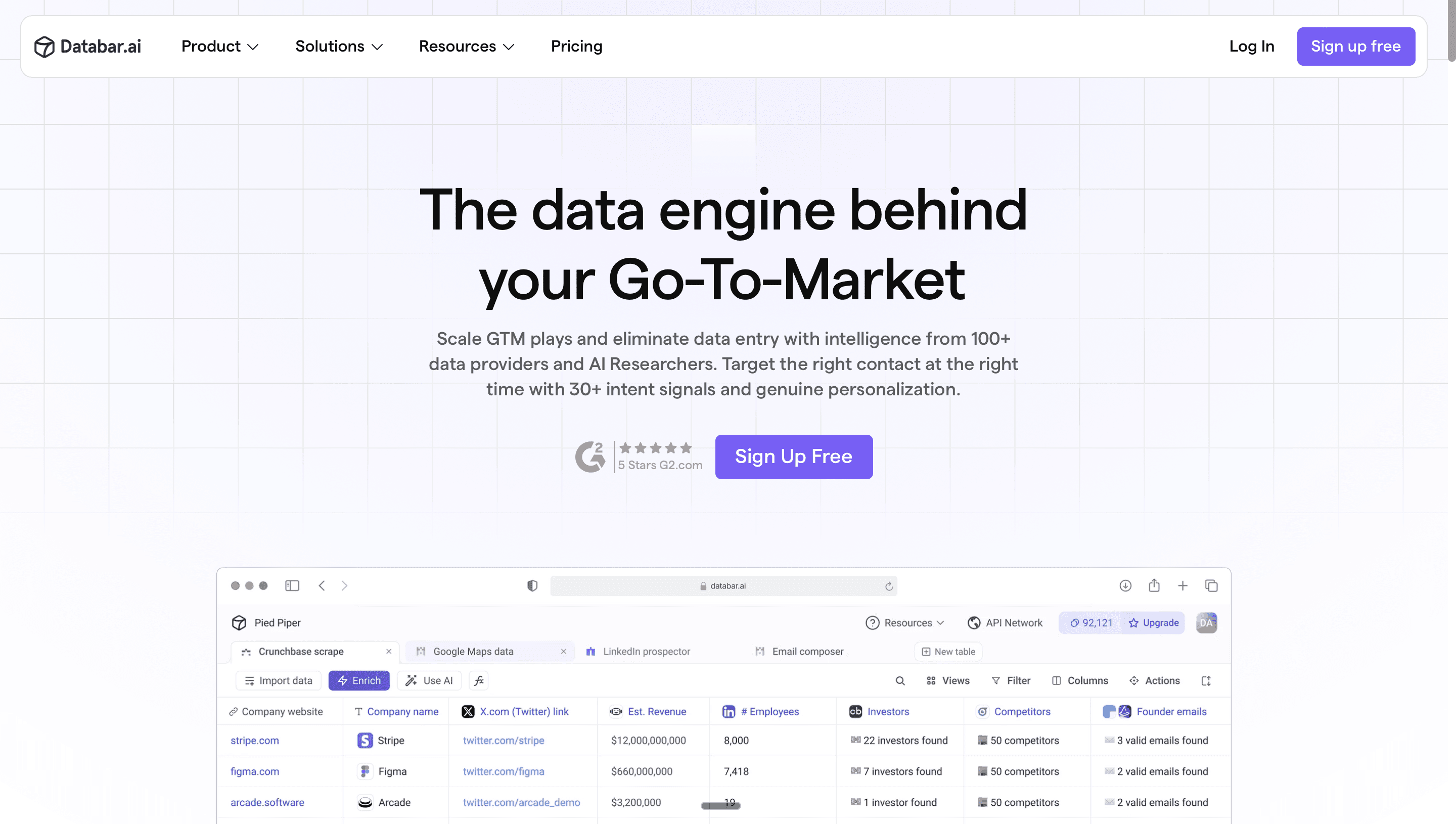
Databar takes a fundamentally different approach to intent data by aggregating signals from multiple data providers through a single platform. Rather than locking you into one vendor's methodology, Databar lets you combine job posting signals, hiring trends, funding announcements, news mentions, technographic changes, and website visitor data into unified intent workflows.
The platform's waterfall enrichment approach queries multiple sources sequentially, maximizing signal coverage while minimizing false negatives. When one provider misses an account, the next one catches it. This multi source strategy typically delivers 20 to 30% better coverage than single provider approaches.
What sets Databar apart is the intuitive workflow builder that connects intent signals directly to CRM enrichment and outreach automation. You're not just identifying intent. You're activating it with complete contact and company data in the same workflow.
Pricing follows a consumption based model starting at $39 monthly, making enterprise grade intent accessible to teams at any stage.
Best for: Teams wanting to combine multiple intent signal types without managing separate vendor contracts, and organizations prioritizing activation over just identification.
Enterprise ABM Platforms
6sense
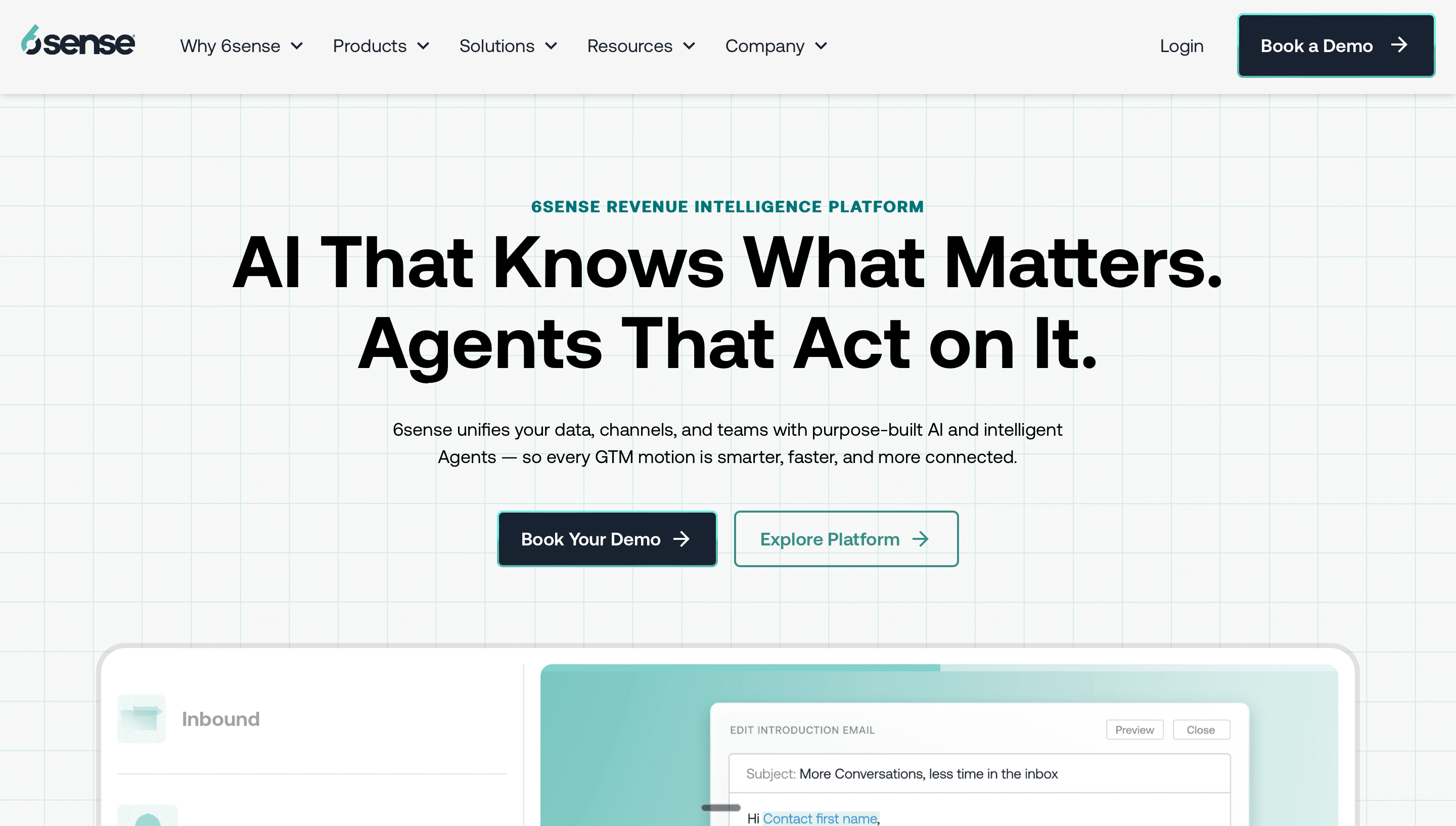
The most comprehensive platform in the space, 6sense combines first party website intelligence with third party intent from Bombora, G2, TrustRadius, and other partners. Its AI engine synthesizes these into buying stage predictions, showing which accounts are in research, consideration, or decision phases.
What makes 6sense different is orchestration. Beyond identifying intent, it activates signals across advertising, sales engagement, and marketing automation from a unified platform. The predictive capabilities and data depth are genuinely impressive.
The trade off is complexity and cost. Implementation typically takes three to six months. Pricing starts around $35,000 annually and scales significantly higher with additional modules. This is an enterprise tool that requires dedicated RevOps resources to fully utilize.
Best for: Mid market and enterprise companies running sophisticated ABM programs with the budget and team to maximize a full platform investment.
Demandbase
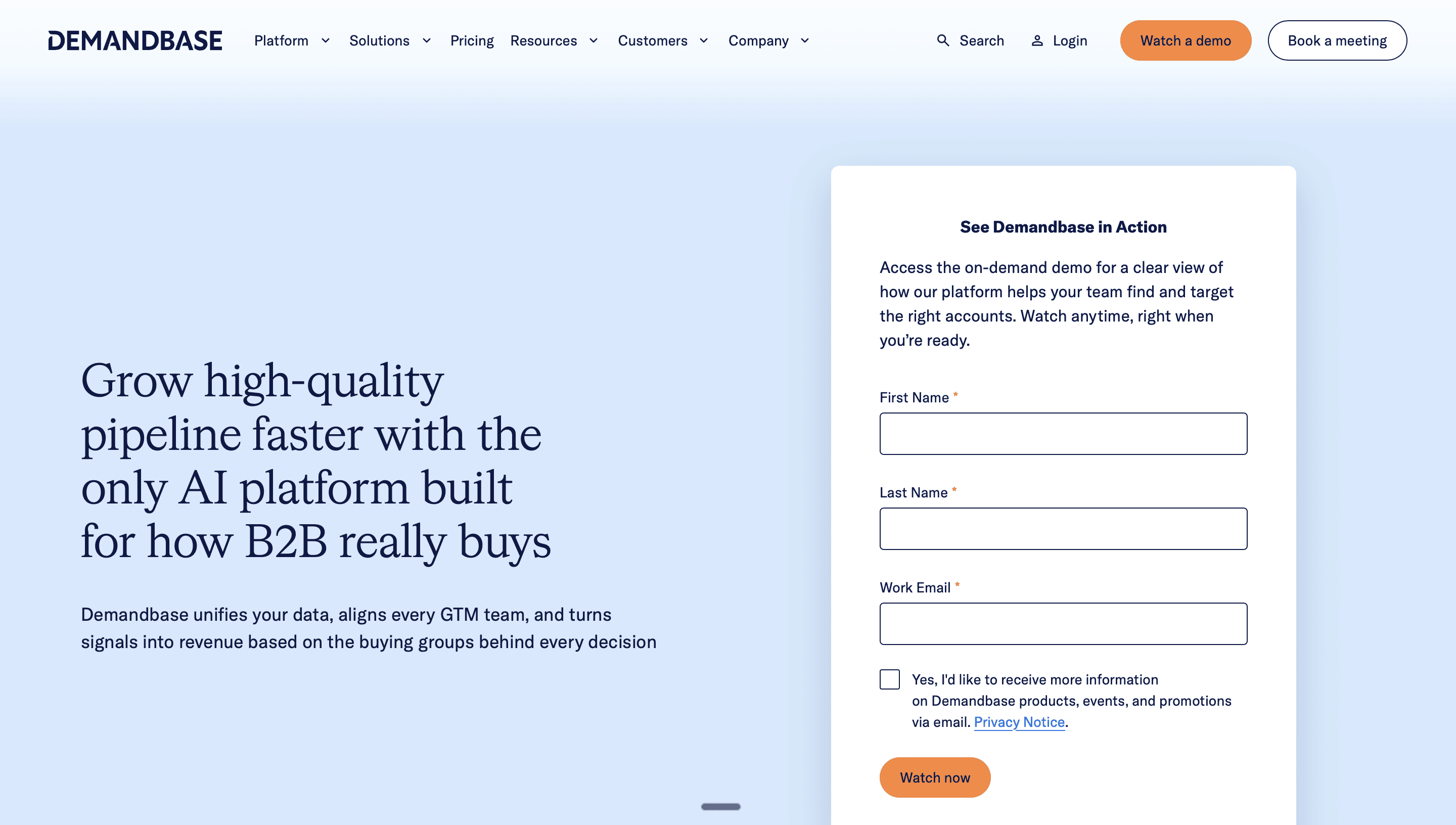
Demandbase takes a similar all in one approach but emphasizes B2B advertising alongside intent data. Its account identification capabilities are strong, combining IP intelligence with behavioral signals to personalize website experiences and ad targeting simultaneously.
The platform aggregates intent from multiple sources including its own network plus Bombora integration. Its advertising capabilities, especially LinkedIn and programmatic display targeting, are more developed than most competitors.
Pricing follows the enterprise model with custom quotes based on modules and usage. Expect similar investment levels to 6sense.
Best for: Marketing teams prioritizing ABM advertising and website personalization alongside intent signals.
For detailed alternatives in this category, see our 6sense alternatives guide.
Pure Play Intent Data
Bombora
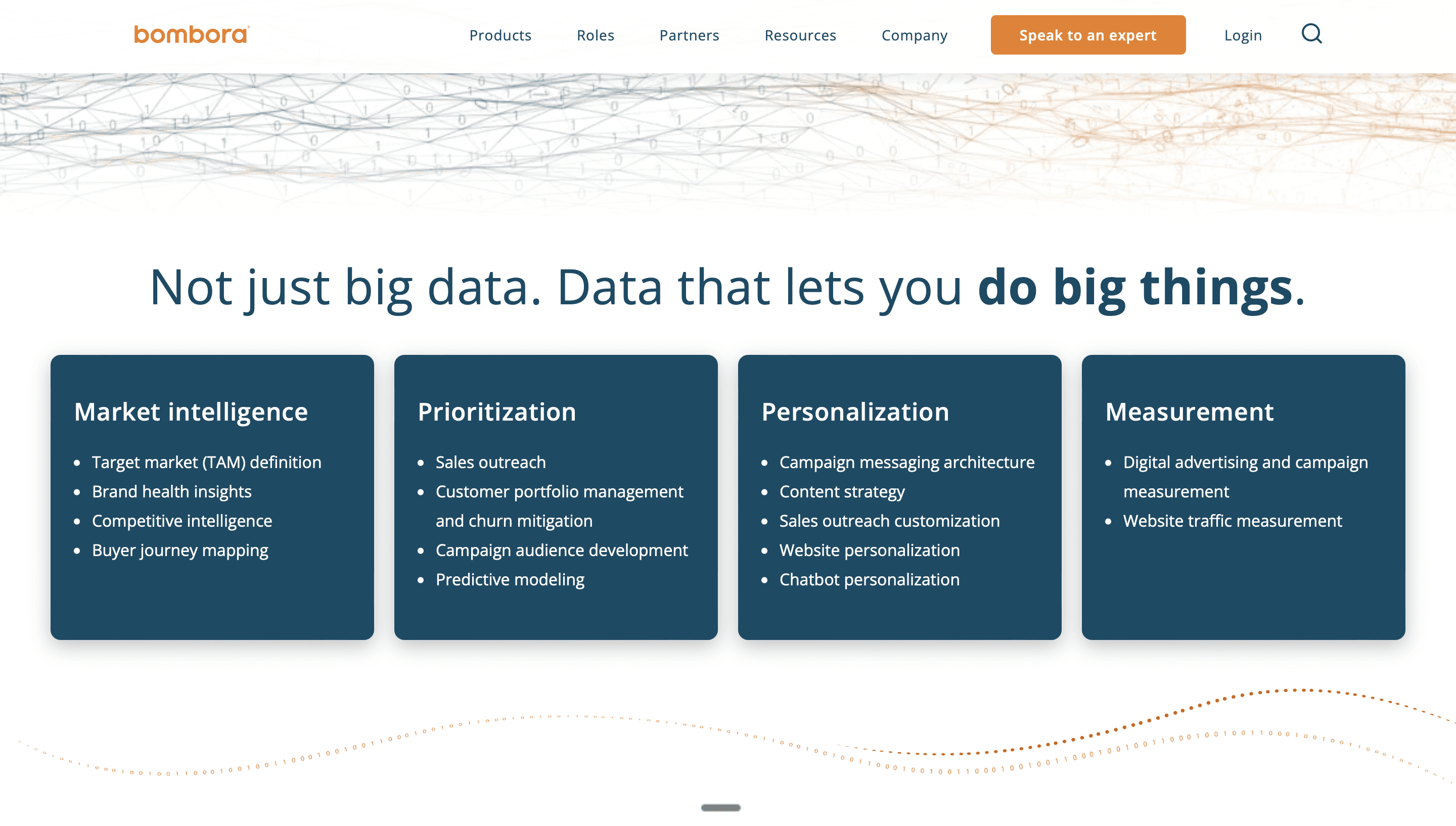
Bombora pioneered the third party intent category and remains the benchmark. Its Company Surge data comes from a cooperative network of over 5,000 B2B publisher websites tracking content consumption patterns. When accounts show elevated research activity around specific topics compared to their baseline, Bombora flags the surge.
Unlike platforms that build workflow layers on top, Bombora focuses purely on data. You receive intent signals to integrate with your existing CRM, marketing automation, or sales engagement tools. This modularity appeals to teams who want signal quality without platform lock in.
The topic taxonomy spans 12,000+ categories, allowing precise targeting around specific product categories, competitors, or industry themes. Many other providers, including 6sense and Demandbase, actually license Bombora data as part of their offerings.
Pricing sits at enterprise levels with custom contracts typically starting in the tens of thousands annually.
Best for: Teams wanting best in class third party intent without adopting a full platform, or organizations already using separate tools for orchestration who need clean data inputs.
Our Bombora alternatives breakdown covers additional options in this category.
TechTarget
TechTarget operates the largest network of enterprise technology media properties, including sites like SearchCRM, TechRepublic, and dozens of specialized IT publications. Its Priority Engine product surfaces accounts consuming content across this network, specifically for technology vendors.
The advantage is signal quality within tech buying journeys. Someone reading in depth comparisons on SearchSecurity is further along than someone browsing generic articles. TechTarget captures that context.
The limitation is vertical focus. If you sell technology products to IT buyers, TechTarget's network delivers exceptional signal quality. For other industries, the coverage simply doesn't exist.
Best for: Technology vendors selling to IT departments, especially enterprise software and infrastructure companies.
G2
G2 provides a unique form of downstream intent based on behavior on its software review platform. Rather than tracking general topic research, G2 captures accounts actively comparing products, reading reviews, and evaluating specific categories.
This is high quality signal for SaaS companies. Someone viewing the comparison page between your product and competitors is demonstrably further along in their buying process than someone researching broad industry topics.
G2 Buyer Intent integrates with major CRMs and marketing automation platforms. Pricing depends on your category and contract structure.
Best for: SaaS companies in categories with significant G2 presence who want review site specific intent rather than broader content consumption signals.
TrustRadius
Similar to G2, TrustRadius offers intent data derived from behavior on its software review platform. The signal focuses on downstream activity: product comparisons, review consumption, and category research.
TrustRadius positions itself on verified reviews from identified users, which some buyers perceive as higher quality than crowd sourced alternatives. The intent data reflects this more curated audience.
Best for: B2B software vendors wanting review platform intent data with emphasis on verified enterprise reviews.
ABM Advertising and Demand Gen
Madison Logic
Madison Logic specializes in ABM media activation, combining intent data with multi channel advertising execution. The platform identifies accounts showing research activity and activates campaigns across display, content syndication, and LinkedIn.
What differentiates Madison Logic is the focus on media rather than just data. You're not receiving intent signals to integrate elsewhere. You're running campaigns against those accounts directly through their platform.
The ML Platform aggregates intent from multiple sources including Bombora and proprietary content engagement data. Campaign performance ties back to account level attribution, showing which intent driven impressions influence pipeline.
Best for: Marketing teams running ABM advertising programs who want intent integrated directly with media execution.
Cognism
Cognism combines B2B contact data, particularly strong in EMEA, with intent signals powered by Bombora's Company Surge technology. The platform tracks research surges across intent topics relevant to each customer's solution.
The European focus differentiates Cognism from US centric competitors. Data quality for GDPR compliant mobile numbers and emails in European markets exceeds most alternatives. Intent capabilities complement the core contact data offering.
Best for: Organizations with significant European target markets who need compliant contact data plus intent signals.
Website Visitor Intelligence
Leadfeeder (now Dealfront)
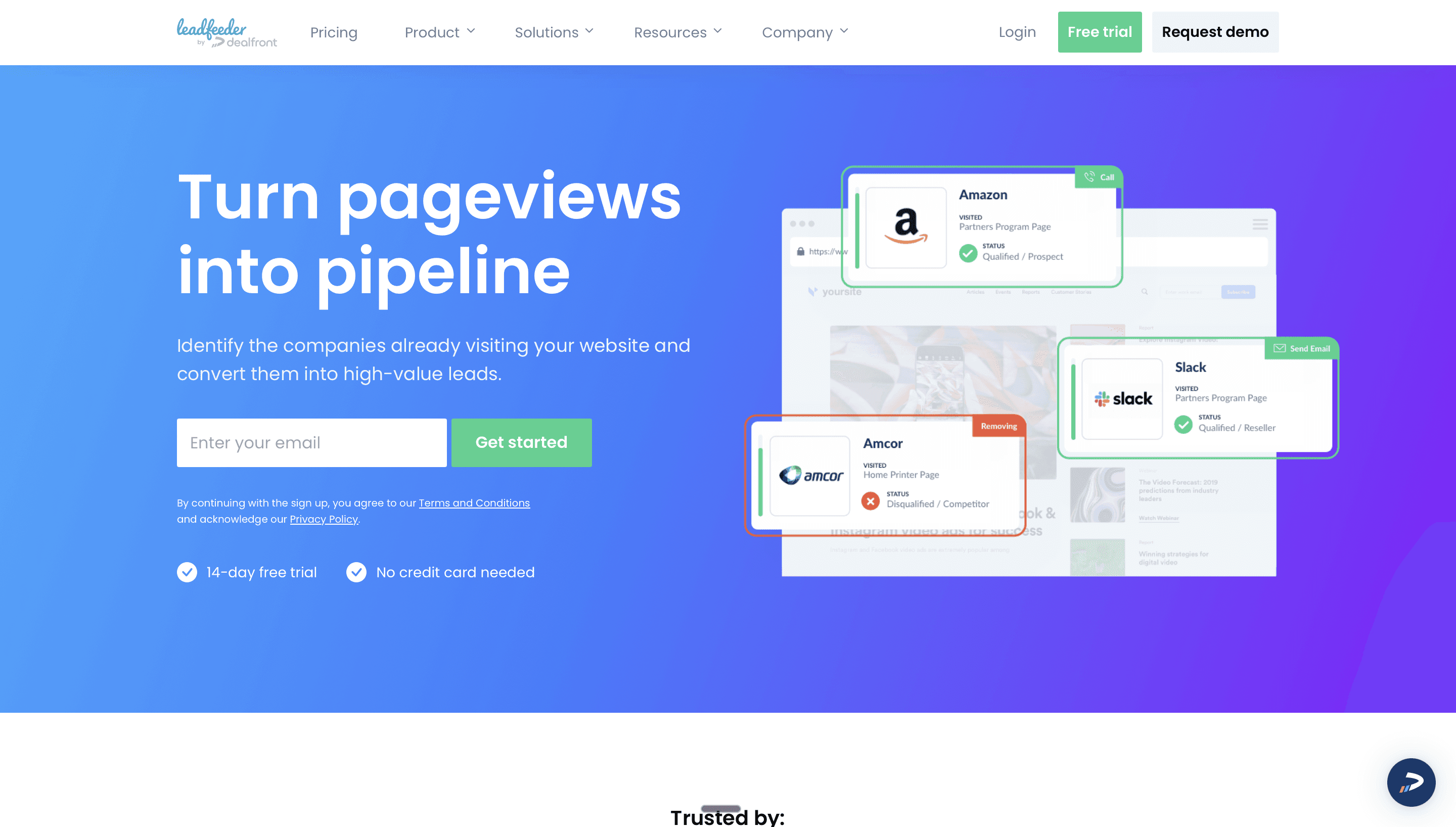
Leadfeeder identifies companies visiting your website by matching IP addresses to organizations. This is first party intent, showing which accounts are researching your solution before they fill out forms.
The platform integrates with CRMs and shows which pages visitors viewed and how long they stayed. For teams with meaningful website traffic, this surfaces active interest from known prospects. Pricing starts around $99 per month.
Best for: B2B companies with established traffic who want to identify anonymous visitors without enterprise investment.
Lead Forensics
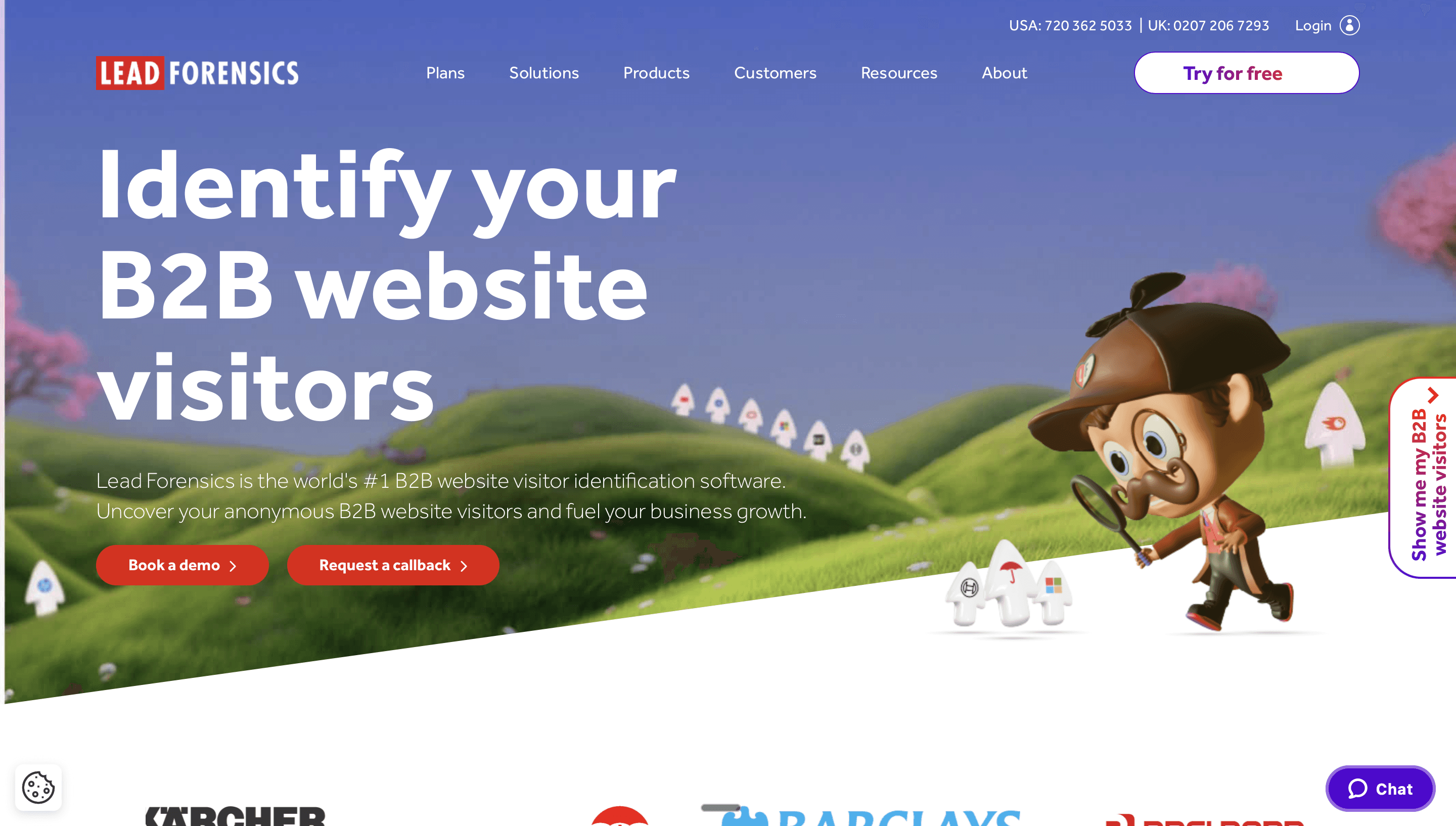
Similar to Leadfeeder, Lead Forensics focuses on website visitor identification with more enterprise positioning. Pricing runs higher for comparable features but includes dedicated support.
Best for: Enterprise teams wanting white glove service for visitor identification.
Specialized and Emerging Providers
Intentsify
Intentsify earned recognition as a leader in Forrester's Wave B2B Intent Data Providers report for 2025, scoring highest across multiple categories including persona based analysis and insight generation. Their Orbit identity graph improves matching accuracy at the contact level, addressing a common weakness where intent data only resolves to accounts rather than specific buyers.
Best for: Enterprise teams prioritizing intent signal accuracy.
LeadSift
LeadSift tracks social and public web intent, capturing mentions, discussions, and engagement across social platforms and news sources. This complements traditional content consumption tracking by adding context about market conversations.
Best for: Teams wanting social signals as an additional intent layer.
HG Insights
HG Insights focuses on technographic intelligence, tracking technology installations and changes. While not pure intent data, technographic signals indicate purchase readiness. A company adopting Salesforce likely needs integrations. A company switching CRMs is evaluating the ecosystem.
Best for: Technology vendors whose sales correlate with technology stack changes.
How Intent Data Providers Collect Web Activity Signals
Understanding how vendors providing intent data for B2B lead generation gather signals helps evaluate quality claims.
Publisher cooperatives like Bombora's involve content sites sharing visitor data in exchange for network insights. Signal quality depends on publisher mix and tracking depth.
IP based identification matches website visitor IP addresses to company records. Accuracy varies based on database quality and how well IP ranges map to organizations.
Review platform behavior from G2 and TrustRadius captures high intent actions like product comparisons. These signals are high quality but narrow in scope.
AI aggregation combines multiple signal types to predict buying readiness. The black box nature makes quality difficult to evaluate independently.
How to Choose a B2B Intent Data Provider
Matching buyer intent data providers to your specific situation requires honest assessment of several factors.
Your current tech stack matters. If you already run 6sense, adding pure intent from Bombora creates redundancy. If you use separate CRM, engagement, and advertising tools, modular intent data might integrate more cleanly.
Signal type alignment matters. Selling to IT buyers? TechTarget's network delivers better signal quality than generic content consumption tracking. Selling SaaS? G2 and TrustRadius intent might outperform broad topic tracking.
Budget reality matters. Enterprise platforms require $35,000 or more annually plus implementation costs. Solutions like Databar, Leadfeeder, or RollWorks provide meaningful intent at accessible price points.
Team capacity matters. Platforms like 6sense require dedicated RevOps to maximize value. Simpler tools deliver faster time to value without specialized support.
Geographic coverage matters. US focused providers often have weaker signal quality internationally. If you sell globally, verify coverage explicitly.
Activating Intent Data Effectively
The common failure mode isn't bad data. It's data that never gets activated. Signals sitting in dashboards don't generate pipeline.
Successful teams connect intent directly to action. High intent accounts route immediately to sales. Medium intent triggers marketing nurture sequences. Low intent stays in brand awareness programs. Routing should be automatic, not manual.
Enrichment amplifies intent value. When an account shows buying signals, you need contacts, firmographics, and technographics to actually reach them. Connecting intent workflows with waterfall enrichment maximizes coverage without managing multiple vendor relationships.
Scoring should weight intent signals appropriately. A topic surge alone might add 20 points. Combined with recent website visits and ICP fit, the same account jumps 50 or more points and triggers immediate outreach.
For comprehensive B2B data enrichment tools that complement your intent strategy, connecting signals to actionable contact and company data is essential.
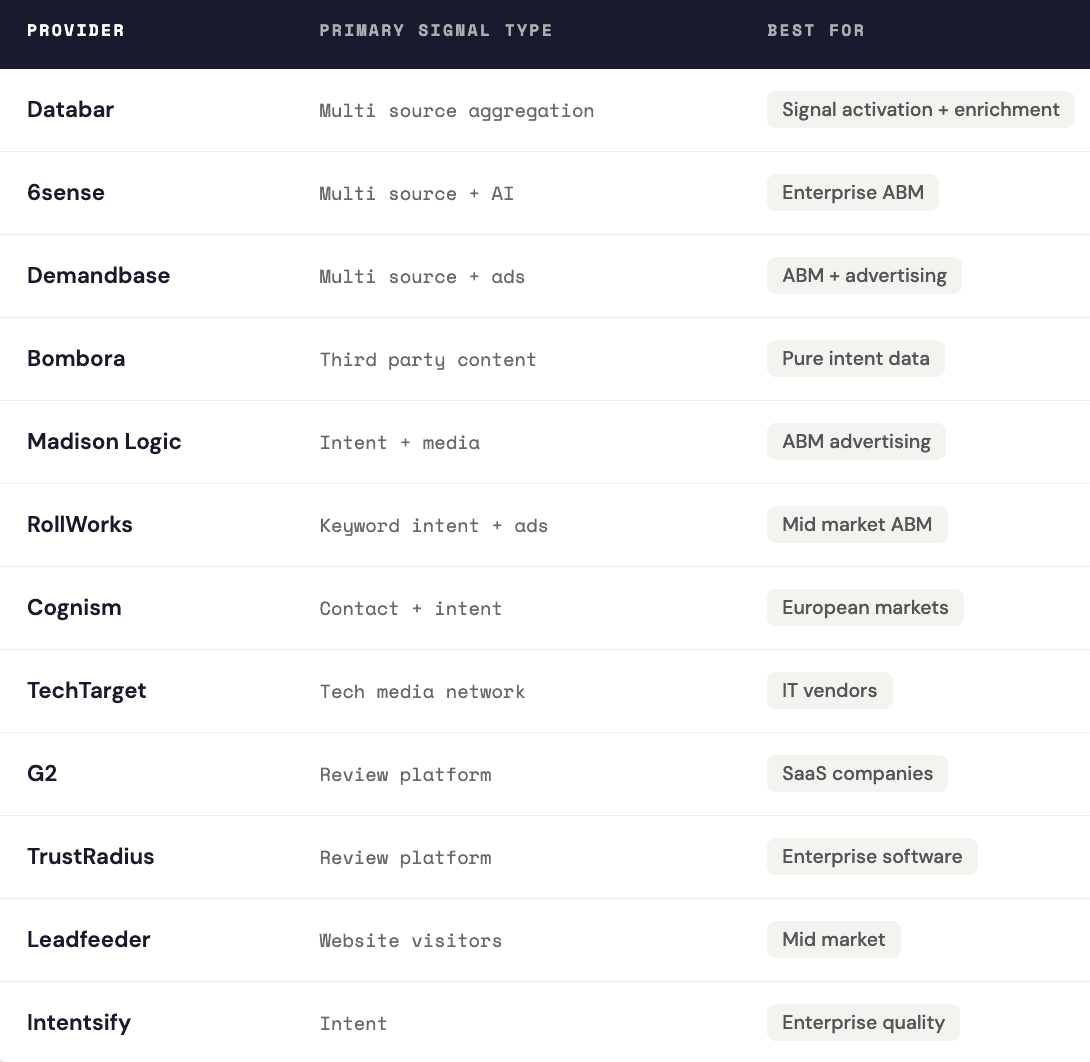
Comparison Summary
Choosing Your Path Forward
The intent data providers landscape offers options for every budget and use case. Multi source platforms like Databar aggregate signals without vendor lock in. Enterprise ABM platforms deliver sophisticated orchestration at significant investment. Pure play providers offer signal quality without platform dependencies.
Start with clear requirements: which signal types matter for how your buyers research, which integrations your stack needs, and what budget allows. Then evaluate providers against those specific criteria rather than general rankings. The best intent data is the data your team actually activates.
FAQ
What are the best buyer intent data providers?
The best provider depends on your situation. For multi source aggregation with activation, Databar combines signals from multiple providers. For enterprise ABM, 6sense and Demandbase lead. For pure third party intent, Bombora remains the benchmark. For ABM advertising, Madison Logic and RollWorks integrate intent with media execution. For budget conscious teams, Leadfeeder provides accessible entry points.
How do intent data providers collect web activity signals?
Methods vary by provider. Publisher cooperatives aggregate content consumption across member sites. IP matching identifies companies visiting websites. Review platforms track product comparison behavior. AI platforms combine multiple signal types into predictive scores.
How do I choose a B2B intent data provider with global coverage?
Verify coverage explicitly. Most US based providers have weaker signal quality outside North America. Cognism specializes in European markets. Enterprise platforms claim global coverage but quality varies by region. Ask for coverage statistics specific to your target geographies.
Which is better, first party or third party intent data?
First party intent from your website provides higher signal quality for accounts that know you. Third party intent identifies accounts researching relevant topics before visiting your site. Most teams benefit from combining both.
Can I use multiple intent data providers together?
Yes, and many mature teams do. Platforms like Databar simplify this by aggregating multiple sources through a single interface. A common approach combines third party intent with website intelligence and review signals. Multi source aggregation reduces false positives and enriches account scoring.
Related articles
See all