
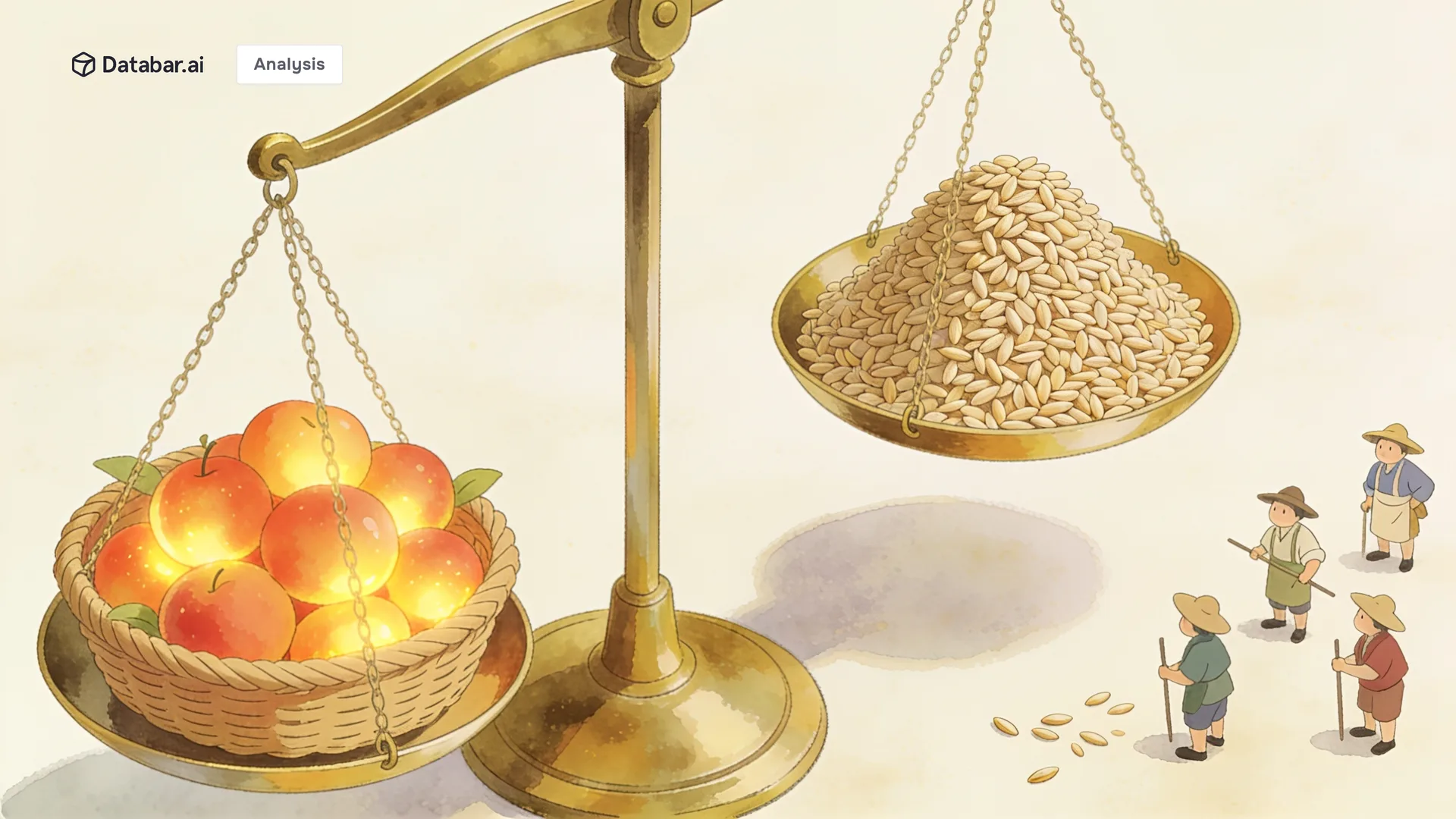
Outcome-based enrichment is the pricing model where you pay only when data successfully returns, and it is the only structure that fits retry-heavy AI workloads in 2026. Per-credit pricing assumes humans triggered each query. AI agents retry, fan out, and fail at rates humans never approached. Credit-based plans bill on every attempt, which means failed enrichment still pays for itself. The 2026 reality is that outcome-based enrichment matches what the data layer actually delivers, not what it attempts. The shift from credit-based to outcome-based pricing is the same shift that hit cloud infrastructure when usage moved from human-paced workloads to agent-paced ones. Per-credit pricing is not dead for everyone, but it is dead for AI-native GTM.
This is the honest read. What outcome-based enrichment actually means, why per-credit pricing breaks for AI workloads, the four pricing models compared, and what production teams pay across the models.
What Outcome-Based Enrichment Actually Means in 2026
Outcome-based enrichment is the pricing model where the data layer charges only when a query successfully returns the requested data. Three properties define it.
Failed enrichments do not bill. If the waterfall runs across 100+ providers and none return the contact, the call costs nothing. The team is not paying for misses, only for hits.
Successful enrichments bill per outcome. When a contact is successfully found, the unit cost is higher than the headline per-call cost on credit-based plans. The unit economics rebalance the cost from spread across all attempts to concentrated on successes.
Retries do not compound. An AI agent that retries 5 times because the first 4 calls failed pays only for the 5th successful call, not all 5. Credit-based plans bill on every retry.
Why Per-Credit Pricing Is Dead for AI Workloads in 2026
Three structural reasons per-credit pricing breaks once AI agents become the primary consumer.
Retry rates change the math. A human SDR querying a contact tries once. An AI agent retries on partial matches, time outs, and rate limits. A 3x retry rate means a credit-based plan bills 3x for the same useful outcome. Outcome-based pricing absorbs the retry overhead.
Fan-out volume exceeds human pace. AI agents work 5 to 10x the volume of human researchers. Credit pools sized for human workloads burn in days. Adding more credits is expensive. Outcome-based pricing scales with delivered value rather than attempted volume.
Exploration patterns produce many failures. AI agents explore by trying many candidates and discarding most. The exploration is part of how they produce quality output. Credit-based pricing penalizes exploration. Outcome-based pricing rewards reaching the right answer regardless of how many tries it took.
The Four Pricing Models in Data Enrichment 2026
Model | Bills on | Best for | Breaks when |
|---|---|---|---|
Enterprise contracts | Annual commit + caps | Predictable enterprise budgeting | Workloads shift mid-contract |
Seat-based with credits | Per user + credit pool | SMB sales motions | AI agents extend reach without seats |
Per-credit (call-based) | Every call attempt | Predictable low-retry workloads | AI agents retry heavily |
Outcome-based (Databar) | Only on successful returns | Retry-heavy AI workloads | Per-success cost higher than per-call headline |
The structural difference is what triggers a bill. Outcome-based bills on the outcome (data returned). Every other model bills on inputs (seats, calls, annual commits). For AI agents that produce variable input-to-outcome ratios, outcome-based is the only model that matches the actual value delivered.
Why Outcome-Based Enrichment Is Hard to Build
Outcome-based pricing requires structural changes most data providers cannot make easily.
The provider must own the waterfall. Outcome-based pricing assumes the data layer can route across many providers and only bill when one returns. Single-source providers cannot offer outcome-based pricing because they have no waterfall. Outcome-based is structurally tied to multi-source aggregation.
The provider must absorb the cost of failures. Failed enrichment still costs the aggregator (API calls to providers, infrastructure, retry handling). Outcome-based providers absorb this cost rather than passing it to consumers. The model requires high enough success rates to be economically sustainable.
The provider needs match-rate confidence. Outcome-based works at 80%+ match rates because most calls succeed. At 50% match rates (single-source caps), the model is unsustainable because half the calls produce no revenue while consuming infrastructure cost. The pattern shows up across the multi-source enrichment for AI agents analysis.
What Outcome-Based Enrichment Looks Like in Production
Three patterns from production teams running outcome-based enrichment.
AI agent research workflow. The agent calls the data layer 50 times to research one account. 35 calls return data. 15 fail. On credit-based pricing, the team paid for 50 calls. On outcome-based pricing, the team paid for 35. Cost-per-account drops 30 percent.
Bulk list enrichment with high-decay segments. The team enriches 5,000 contacts. 4,200 return data successfully. 800 fail because the contacts are out of the providers' coverage. Credit-based: 5,000 charges. Outcome-based: 4,200 charges. Cost drops 16 percent on the same workload.
Real-time inbound routing. Webhook fires on a form submission. The agent enriches, scores, routes. 90 percent of submissions enrich successfully. Outcome-based pricing means the team pays for the 90 percent that actually got routed, not the 100 percent that triggered enrichment. The pattern shows up across the real-time enrichment for AI agents production analysis.
How Outcome-Based Enrichment Compares on Total Cost
Headline cost comparison misses the structural difference. Total cost of ownership shows the gap clearly.
Credit-based example. $0.10 per credit. Team runs 100,000 calls per month. 60 percent success rate (single-source typical). Total cost: $10,000. Cost per usable contact: $0.17.
Outcome-based example. $0.18 per successful match. Same 100,000 attempts, 85 percent success rate (multi-source typical). Total cost: $15,300. Cost per usable contact: $0.18.
The per-successful-match cost is similar, but the outcome-based team gets 25 percent more usable contacts on the same volume. The structural advantage is not per-unit price. It is the success rate and the alignment of cost with value delivered.
Where Outcome-Based Enrichment Breaks
Three honest failure modes outcome-based pricing has.
Per-success cost is higher than per-call cost on paper. Procurement teams comparing headline numbers see $0.18 outcome-based vs $0.10 credit-based and assume outcome-based is more expensive. Total cost of ownership analysis is required to see the real picture.
Newer pricing model with less benchmarking data. Credit-based has been the standard for years. Outcome-based emerged with AI workloads. Procurement teams that prefer well-benchmarked vendors may see outcome-based as a risk.
Provider lock-in shifts but does not disappear. Outcome-based does not eliminate lock-in. It just changes where the lock-in lives. The aggregator that bills outcome-based controls the provider waterfall. Migration to a different aggregator still requires re-integration.
How to Evaluate Outcome-Based Enrichment in 2026
Five questions to ask any vendor offering outcome-based pricing.
What is the typical match rate? Outcome-based only works structurally if match rates are high. Aim for 80%+ on production workloads.
What counts as a successful outcome? Definitions matter. A "successful match" should mean useful data returned, not just any response.
What is the per-success cost? Compare to your current per-call cost adjusted for success rate. Total cost of ownership is the real number.
What happens to caching and retries? Cached returns should not bill twice. Retries that hit the same successful answer should not bill twice.
What is the migration path? Can you swap to a different aggregator if needed, or are you locked into this vendor's waterfall?
How Outcome-Based Enrichment Fits the AI-Native GTM Stack
Outcome-based enrichment fits the AI-native GTM stack because it matches the cost shape to the value shape.
AI agents produce variable input-to-output ratios. Some queries succeed on the first call. Others require multiple retries. Some fail entirely. Credit-based pricing forces the team to absorb the variance on the cost side. Outcome-based pricing puts the variance on the provider side. The team's cost matches usable output.
The same alignment shows up across the broader stack pattern. The agentic GTM stack 5-layer framework covers the layers where outcome-based pricing makes the data layer's economics work with agent-driven workloads.
Pick the Pricing Model That Matches Your Workload Shape
Per-credit pricing assumes humans triggered each query. AI agents broke that assumption. Outcome-based enrichment matches cost to delivered value rather than attempted volume. The shift is the same shift cloud infrastructure made when usage moved from human-paced to agent-paced workloads.
Databar uses outcome-based billing where you only pay when data returns successfully. 100+ providers, native MCP and SDK, waterfall enrichment, match rates around 85% in waterfall mode. Designed for retry-heavy AI workloads where credit-based plans burn fast. 14-day free trial at build.databar.ai.
FAQ
What is outcome-based enrichment in 2026?
Outcome-based enrichment is the pricing model where the data layer charges only when a query successfully returns the requested data. Failed enrichments do not bill. Retries that fail do not compound. The model matches cost to value delivered rather than attempts made, which fits AI agent workloads that retry and fan out heavily.
Why is per-credit pricing dead for AI workloads?
Three structural reasons. Retry rates change the math (3x retries mean 3x credit billing for the same outcome). Fan-out volume exceeds human pace (agents work 5-10x faster). Exploration patterns produce many failures as part of how agents produce quality output. Credit-based plans penalize exploration. Outcome-based plans match cost to usable output.
How is outcome-based enrichment different from per-credit pricing?
Per-credit bills on every call attempt regardless of success. Outcome-based bills only when data successfully returns. For a workload with 60% success rate, credit-based bills 100 percent of attempts while outcome-based bills 60 percent. For retry-heavy AI workloads with 3x retries, the gap widens further.
What is the total cost of ownership for outcome-based enrichment?
Per-success cost is higher than per-call cost on paper. But outcome-based aggregators typically deliver higher success rates (around 85% multi-source vs 50% single-source). Cost per usable contact ends up similar or favorable to credit-based. Procurement teams comparing headline per-unit cost without total cost of ownership analysis miss the structural advantage.
Can outcome-based enrichment work for any data provider?
No. Outcome-based requires the provider to absorb the cost of failed enrichments, which is only sustainable at high match rates. Single-source providers (Apollo, ZoomInfo, Cognism) cap around 50% match rate and cannot offer outcome-based pricing structurally. Multi-source aggregators with 80%+ match rates can. The pricing model is tied to the architecture.
Where does outcome-based enrichment break?
Three places. Per-success cost looks higher than per-call cost without total cost of ownership analysis. Newer pricing model with less benchmarking data than credit-based. Provider lock-in shifts to the aggregator's waterfall but does not disappear. The structural advantages outweigh these tradeoffs for AI-native motions.
What stack do I need for outcome-based enrichment?
A multi-source aggregator with high match rates and outcome-based billing (Databar across 100+ providers). Real-time queries through MCP, SDK, or REST. AI agent runtime that benefits from the retry-friendly economics. Outcome-based pricing only makes sense when the workload pattern actually retries and explores.
Also Interesting
Related articles
See all