
Most revenue teams are drowning in tools but starving for results.
The typical B2B GTM team juggles somewhere between 10 and 15 different applications on any given day - bouncing between LinkedIn, Apollo, ZoomInfo, their CRM, a sequencing tool, maybe a calling platform, and about half a dozen browser tabs that never seem to close. A recent study found that sales reps spend roughly 520 hours per year on repetitive manual tasks. That's over two full weeks, per person, doing work that machines could handle in seconds.
And here's the frustrating part: companies keep buying more tools to fix the problem, when what they actually need is better GTM workflows connecting the tools they already have.
This guide breaks down how modern go-to-market teams are building automated workflows that eliminate the chaos - from lead routing and data enrichment to outreach sequencing and revenue intelligence. We'll cover what works, what doesn't, and how to start building systems that scale without burning out your team.
What Exactly Are GTM Workflows?
A GTM workflow is any repeatable process that moves a prospect through your go-to-market motion, from the moment they enter your system to the point they become a customer (and beyond).
Think of it this way: every time someone visits your website, fills out a form, engages with content, or shows up in your database, something needs to happen next. That "something" is your workflow.
Traditional GTM workflows looked like this:
Marketing captures a lead
Someone manually reviews it
The lead gets assigned to a rep (eventually)
The rep researches the company
They write an email
They send it
They log the activity in the CRM
Repeat
The problem? Each of those steps introduces delay, human error, and inconsistency. According to reports, 46% of companies take hours (not minutes) to create the first sales activity on new leads. Even worse, 38% of companies need more than two weeks to turn newly assigned leads into opportunities.
That's momentum disappearing into thin air.
Modern automated GTM workflows compress these steps into seconds. A lead fills out a form, and within moments they're enriched with firmographic data, scored against your ICP, routed to the right rep, and added to a personalized sequence - all without a human touching anything.
The Core GTM Workflow Categories
Not every workflow serves the same purpose. Here's how they typically break down:
Lead Capture and Enrichment Workflows
This is where most teams start. Raw leads come in through various channels (website forms, events, content downloads, outbound lists) and need to be transformed into actionable records before anyone can do anything useful with them.
A solid enrichment workflow handles:
Company data: Adding firmographics like employee count, revenue range, industry, and location. This sounds basic, but you'd be surprised how many teams work with half-empty CRM records.
Contact data: Finding verified email addresses and direct phone numbers. The difference between reaching someone's inbox versus hitting their spam folder often comes down to data quality.
Technographics: Understanding what tools a company uses. If you're selling a HubSpot integration, knowing that a prospect already runs HubSpot is pretty important.
Intent signals: Identifying companies showing buying behavior. Are they researching solutions in your category? Did they just raise funding? Hire a new VP of Sales?
The goal isn't just data collection, nut it's building a complete picture fast enough that reps can act while the lead is still warm.
Lead Routing and Assignment Workflows
Routing seems straightforward until you actually try to implement it. The questions multiply quickly:
Does this lead belong to an existing account? Who owns that account? Is the lead even qualified? Should it go to an SDR or directly to an AE? What about round-robin fairness? Territory rules? Capacity limits?
GTM operations teams spend enormous amounts of time building and maintaining routing logic. The good ones automate it. The rest rely on spreadsheets and hope.
Effective lead routing workflows typically include:
Duplicate detection and merging
ICP scoring and qualification
Territory matching
Account matching (connecting leads to existing opportunities)
Rep availability and capacity checks
SLA timers for response requirements
When routing breaks down, leads fall through cracks or end up with the wrong people. Neither outcome is good for pipeline.
Outbound Prospecting Workflows
The traditional outbound playbook (build a list, blast emails, hope for responses) stopped working years ago. Email providers cracked down. Buyers got smarter. Response rates tanked.
Smart AI agents for outbound GTM workflows have changed the equation. Instead of spray-and-pray, modern outbound operates on triggers:
A target account just raised a Series B? That's a trigger.
They posted a job for a Sales Development Manager? That's a trigger.
Their CEO just published a LinkedIn post about scaling challenges? That's a trigger.
Signal-based outbound workflows monitor these events continuously and initiate personalized outreach when the timing makes sense. The rep doesn't have to hunt for the signal - the workflow surfaces it automatically, often with suggested messaging based on the specific context.
Revenue Intelligence Workflows
Once leads become opportunities, the workflow focus shifts to deal progression and risk management.
Revenue intelligence workflows track:
Deal stage progression and velocity
Stakeholder engagement patterns
Competitive mentions in calls or emails
Risk indicators (going dark, champion leaving, budget concerns)
Expansion signals in existing accounts
These workflows feed dashboards, trigger alerts, and help managers coach reps on deals that need attention. The AI-native companies doing this well report 35% better forecast accuracy, because they're not guessing about deal health, they're measuring it.
Building Effective GTM Workflows: A Practical Framework
Theory is nice, but implementation is what matters. Here's how to approach building workflows that actually work.
Start With Your Biggest Bottleneck
Don't try to automate everything at once. Find the single point in your GTM process where the most time gets wasted or the most leads get stuck. That's your starting point.
Common first targets include:
Inbound lead response time
List building and enrichment for outbound
Lead-to-account matching
Meeting scheduling
Data entry after calls
Pick one. Nail it. Then move on.
Map the Current State Honestly
Before automating anything, document how things actually work today -not how they're supposed to work according to some old process doc.
Talk to the people doing the work. Watch them do it. Ask where they spend time waiting, where things get stuck, where they work around the official process.
You might discover that your "automated" lead routing actually involves someone manually checking a spreadsheet. Or that reps skip the CRM logging step entirely. Or that marketing qualified leads sit in a queue for days because nobody owns the follow-up.
These discoveries shape what needs to change.
Choose Triggers and Actions Carefully
Every workflow has triggers (what starts it) and actions (what happens). The art is matching these appropriately.
Good triggers are:
Specific and unambiguous
Timely (they fire when action is actually needed)
Reliable (they work consistently)
Bad triggers are:
Too broad (creates noise)
Too narrow (misses relevant cases)
Dependent on manual inputs (introduces delay)
For actions, think about what the ideal next step would be if a human had unlimited time and perfect information. That's your target. Then figure out what portion of that can be automated.
Build in Feedback Loops
Workflows shouldn't be set-and-forget. Build in mechanisms to measure performance and identify problems.
Track metrics like:
Workflow completion rates (did the workflow actually finish?)
Time between steps (where are the delays?)
Downstream conversion (did automated leads convert better or worse?)
Error rates (what's breaking?)
Review these regularly and iterate. The first version of any workflow is never the final version.
The Tech Stack for Modern GTM Workflows
Building automated workflows requires the right foundation. Here's what typically needs to be in place.
The CRM as System of Record
Everything starts with your CRM - Salesforce, HubSpot, or whatever you're using. This is where customer data lives and where workflows ultimately need to sync.
The CRM doesn't need to do everything, but it does need to be the source of truth. Any workflow that creates or modifies data should push changes back to the CRM.
Data Enrichment Layer
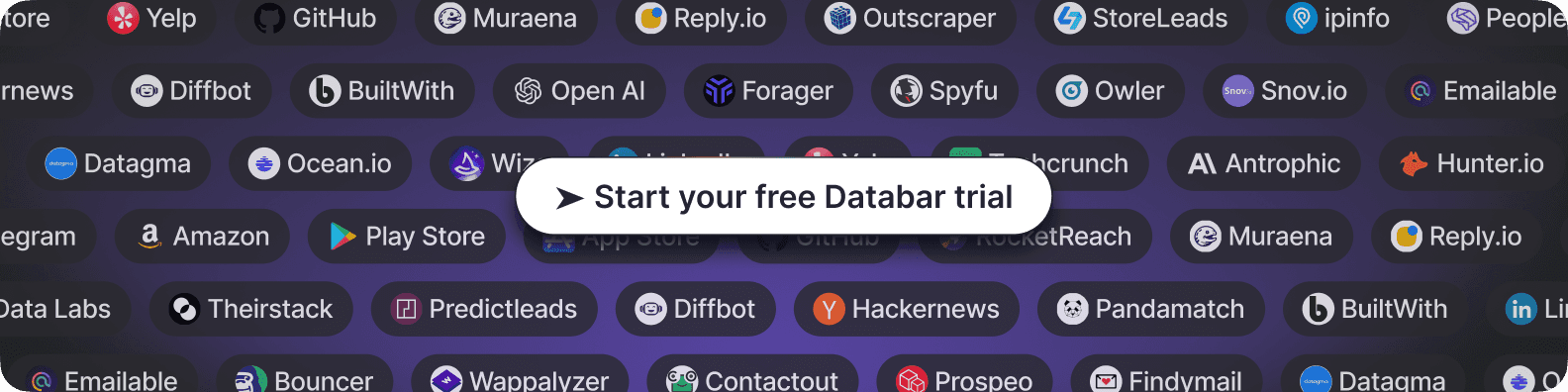
Raw leads need enhancement. This is where platforms like Databar come in, connecting to 160+ data providers through a single interface, running waterfall enrichment that queries multiple sources until you get a match.
The multi-provider approach matters because no single data vendor has 100% coverage. Hunter.io might have the email, Owler might have the firmographics, and BuiltWith might have the tech stack. Waterfall enrichment strings these together automatically, typically achieving 80-90% match rates compared to 50-60% from any single source.
Workflow Orchestration Platform
Something needs to coordinate the moving pieces - triggering enrichments, evaluating conditions, routing leads, initiating sequences. This might be native CRM workflows, a dedicated orchestration tool like Clay or Tray.io, or a combination.
The key is that orchestration happens automatically based on data and events, not manual intervention.
Outreach Execution Tools
Workflows identify who to contact and when. Execution tools actually send the messages. This includes email sequencing platforms, LinkedIn automation, dialers, and increasingly, AI SDR tools that handle initial outreach autonomously.
The line between orchestration and execution is blurring. Modern platforms often handle both, which reduces integration complexity.
Intelligence and Analytics
Finally, you need visibility into what's working. Pipeline analytics, workflow performance metrics, and revenue intelligence all feed back into optimization.
This closes the loop, you see what's converting, identify what's not, and adjust workflows accordingly.
AI Agents in GTM Workflows: What's Real and What's Hype
Every vendor is slapping "AI" on their product these days, so it's worth cutting through the noise. Here's what AI agents actually do well in GTM workflows and where they still fall short.
Where AI Delivers Real Value
Research automation - AI agents can browse websites, analyze content, and extract specific data points faster than any human. Things like: What tech does this company use? How many employees? Recent news? Funding history? All gatherable in seconds.
Content personalization - Generating email copy that references specific triggers, company details, or prospect backgrounds. Not generic mail-merge, but actually contextual personalization at scale.
Lead scoring and prioritization - Analyzing multiple signals to surface the accounts and contacts most likely to convert. Pattern recognition across historical data beats gut feel.
Conversation intelligence - Transcribing calls, identifying competitive mentions, flagging risk indicators, and suggesting follow-up actions based on what was discussed.
Where AI Still Struggles
Strategic judgment - AI can execute tactics but can't set strategy. Deciding which markets to target, how to position against competitors, or whether a deal is worth discounting still requires human judgment.
Relationship building - Important deals get won through relationships. AI can facilitate introductions and surface context, but it can't build trust.
Handling exceptions - Workflows work great when things follow patterns. AI stumbles when situations are genuinely novel or require creative problem-solving.
Complex negotiations - High-stakes conversations with multiple stakeholders, competing interests, and nuanced objections still need humans.
The smartest teams use AI to handle volume and routine tasks while preserving human involvement for high-value interactions. The goal isn't replacing reps—it's letting them focus on work that actually requires human skills.
Getting Started: Your First GTM Workflow
Feeling overwhelmed? Start simple.
Here's a straightforward workflow most teams can implement within a week:
Trigger: New lead created in CRM
Actions:
Check for existing company match
Enrich with firmographic data (employee count, industry, revenue)
Enrich with contact data (verified email, phone)
Score against ICP criteria
Route to appropriate owner based on territory/segment
If qualified, add to relevant outreach sequence
Create task for rep with context summary
This single workflow eliminates manual research, enforces consistent qualification, ensures fast routing, and initiates follow-up automatically. Build it once, and every new lead benefits forever.
From there, expand to:
Website visitor identification and outreach
Intent signal monitoring and alerts
Existing customer expansion triggers
Deal risk detection and intervention
Data maintenance and refresh cycles
Each workflow builds on the last, creating a compounding advantage over teams still operating manually.
FAQ
What is a GTM workflow?
A GTM workflow is an automated process that moves prospects through your go-to-market motion - from initial capture through enrichment, qualification, routing, outreach, and conversion. Workflows connect tools, enforce consistency, and eliminate manual handoffs between steps.
Why do GTM workflows matter for B2B teams?
B2B GTM teams face long sales cycles, multiple stakeholders, and complex qualification requirements. Automated workflows compress response times, improve data quality, and enable reps to focus on selling rather than administrative tasks. Teams with mature workflows typically see faster pipeline velocity and higher win rates.
What are the best AI tools for GTM workflows in 2026?
The best AI tools for GTM workflows depend on your specific needs. For data enrichment, multi-provider platforms like Databar offer waterfall enrichment across 90+ sources. For outreach, Reply.io and Instantly provide AI-powered sequencing. For conversation intelligence, Gong and Chorus analyze calls and surface insights.
How do smart AI agents improve outbound GTM workflows?
Smart AI agents for outbound GTM workflows automate research, personalization, and initial engagement. They monitor trigger events (funding, hiring, job changes), generate contextual messaging, and handle routine prospecting tasks - allowing reps to focus on qualified conversations rather than manual list building and email writing.
What causes GTM workflow inefficiencies?
Common GTM workflow inefficiencies include slow lead response times (46% of companies take hours to engage new leads), poor data quality and decay, siloed systems that break handoffs, manual research eating rep time, and lack of automation connecting tools. These inefficiencies compound, causing leads to go cold and opportunities to slip.
How do I achieve sales and marketing alignment through workflows?
Sales marketing alignment comes from shared data, unified workflows, and common metrics. Automated workflows ensure leads flow seamlessly between teams with full context. When marketing sees what happens after handoff and sales understands which campaigns drive pipeline, both teams can optimize toward shared revenue goals.
What should I automate first in my GTM workflow?
Start with your biggest bottleneck, usually inbound lead response. A simple workflow that enriches new leads, scores them against your ICP, routes to the right owner, and initiates follow-up can cut response times from hours to seconds. Once that's working, expand to outbound enrichment, intent monitoring, and deal intelligence.
Related articles
See all