
Your CRM has the same company listed five different ways: "Acme," "Acme, Inc.," "ACME Corporation," "Acme Inc," and "acme llc." Each variation creates a separate record. Your reporting is fragmented. Your sales team doesn't realize they're working the same account. And your duplicate detection keeps failing because none of these records match.
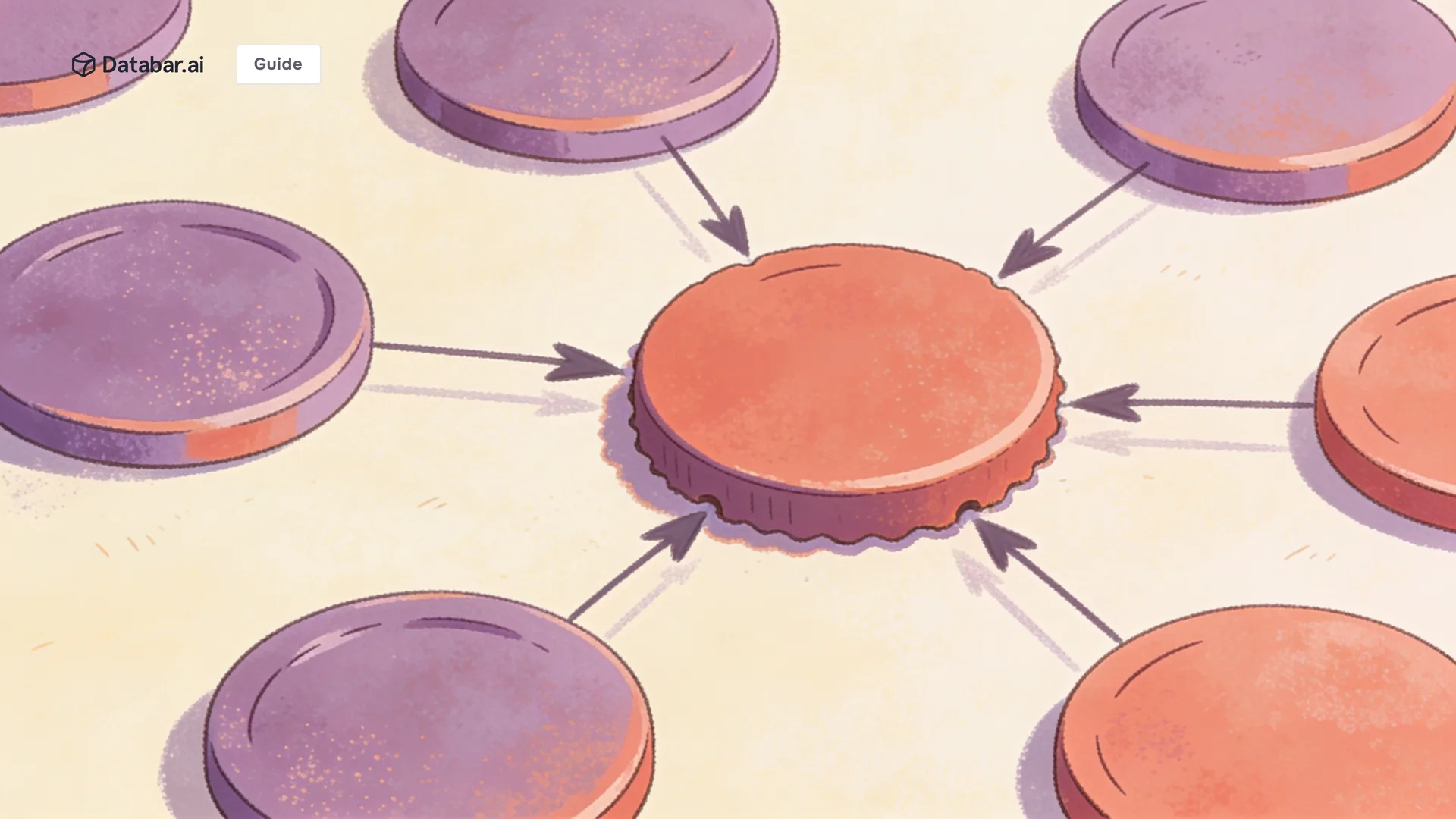
Brand name normalization fixes this by establishing consistent rules for how company names appear in your database. Instead of five variations, you have one canonical record: "Acme." Every new entry that matches gets mapped to that standard form.
This guide covers the specific rules that govern effective brand name normalization, how to implement them without breaking your data, and when it makes sense to automate the process.

What Brand Name Normalization Means
At its core, brand name normalization rules define how company names should be standardized across your systems. When raw data enters your CRM - from imports, form fills, integrations, or manual entry - these rules turn variations into a consistent format.
The goal isn't just aesthetics. Normalized names enable:
Accurate deduplication: "Microsoft Corporation" and "Microsoft Corp" merge into one record instead of creating duplicates that fragment your customer history.
Clean reporting: When every record uses the same company name format, account-level reporting actually works. Revenue by account, engagement by company, pipeline by organization, all become reliable.
Effective segmentation: Building a list of "all Fortune 500 companies in our database" requires that Fortune 500 names appear consistently. Variations break that segmentation.
Better personalization: Nobody wants an email that opens with "Hi, I noticed ACME CORPORATION LLC is..." Clean names mean clean outreach.
The Core Normalization Rules
Effective brand name normalization follows a hierarchy of transformations. Apply these in order for consistent results:
Rule 1: Remove Legal Entity Suffixes
Legal suffixes like Inc., Corp., LLC, Ltd., GmbH, and S.A. serve legal purposes but add noise in CRM data. For most operational uses, they should be stripped.
Common suffixes to remove:
United States: Inc., Incorporated, Corp., Corporation, LLC, L.L.C., Ltd., Limited, Co., Company, LP, LLP
United Kingdom: Ltd, Limited, PLC, LLP
Germany: GmbH, AG, KG, OHG
France: SA, SAS, SARL
International variations: Pty Ltd, BV, NV, SpA, AB
Before → After:
"Salesforce, Inc." → "Salesforce"
"HubSpot LLC" → "HubSpot"
"Deutsche Bank AG" → "Deutsche Bank"
Exception: Some companies include legal terms as part of their brand identity. "The Limited" (the retailer) isn't "The", it's the actual brand name. Build an exception list for these cases.
Rule 2: Standardize Capitalization
Inconsistent casing creates matching failures and looks unprofessional in communications.
Options for standardization:
Title Case: "Procter And Gamble" (most common for display)
As-Entered with corrections: Preserve intentional casing but fix obvious errors
Lowercase for matching: Used for deduplication logic, not display
Common casing issues:
All caps: "JOHNSON & JOHNSON" → "Johnson & Johnson"
All lowercase: "netflix" → "Netflix"
Random casing: "MicroSOFT" → "Microsoft"
Watch for: Companies with intentional non-standard casing. "eBay" isn't "Ebay." "iPhone" isn't "IPhone." Maintain a canonical list of brands with specific casing requirements.
Rule 3: Handle Punctuation and Special Characters
Punctuation varies wildly across data sources and creates matching failures.
Standard approach:
Remove periods from abbreviations: "A.B.C. Corp." → "ABC"
Standardize ampersands vs. "and": Pick one and stick with it. "Procter & Gamble" or "Procter and Gamble", not both.
Remove commas before suffixes: "Acme, Inc." → "Acme Inc" (then remove the suffix per Rule 1)
Handle apostrophes consistently: "McDonald's" should stay "McDonald's" - the apostrophe is part of the brand.
Remove or replace hyphens based on official branding: "Hewlett-Packard" keeps the hyphen; "Wal-Mart" became "Walmart."
Trimming rules:
Remove leading/trailing spaces
Collapse multiple internal spaces into single spaces
Remove leading/trailing quotation marks (common in CSV imports)
Rule 4: Normalize Abbreviations
Some companies are known by abbreviations. Others aren't. Consistency matters.
Expand or standardize common abbreviations:
"Intl" → "International" (or vice versa, pick one)
"Mfg" → "Manufacturing"
"Tech" → "Technology" (unless it's the actual brand name)
"Svcs" → "Services"
Known abbreviations to preserve:
"IBM" stays "IBM" (not "International Business Machines")
"AT&T" stays "AT&T"
"3M" stays "3M"
"HP" may need context, is it Hewlett Packard or HP Inc. (the current company)?
Build your canonical list based on how these companies are commonly referenced in your industry.
Rule 5: Handle Parent/Subsidiary Relationships
A company may appear as the parent entity, a subsidiary, a division, or a regional variant. Decide how granular you want to be.
Options:
Normalize to parent: "Instagram" → "Meta" (if you're tracking at the corporate level)
Preserve as-is: Keep "Instagram" separate from "Meta" (if you're engaging them as distinct entities)
Create associations: Link "Instagram" to "Meta" without merging the records
There's no universally "right" answer here. It depends on how your business engages with these entities. A company selling enterprise software might want everything rolled up to the parent. An agency managing social campaigns might need to keep platforms separate.
Rule 6: Geographic and Regional Variants
Global companies often have regional entities with distinct names.
Examples:
"Google LLC" (US) vs. "Google UK Limited" vs. "Google Ireland Limited"
"Toyota Motor Corporation" vs. "Toyota Motor Sales, U.S.A., Inc."
Approach options:
Strip geographic qualifiers and normalize to the core brand
Preserve regional distinctions if they matter for your business (compliance, territory assignment, etc.)
Create a parent record with linked regional records
Rule 7: Handle "The" Prefix
Many companies use "The" in their official name. Most operational contexts drop it.
Standard rule: Remove leading "The" unless it's genuinely part of the brand identity.
"The Coca-Cola Company" → "Coca-Cola"
"The Home Depot" → "Home Depot"
"The New York Times" → Judgment call - often kept because "New York Times" sounds incomplete
Building Your Normalization Ruleset
Rules without implementation are just theory. Here's how to build an operational system:
Step 1: Audit Your Current Data
Before writing rules, understand what you're working with. Export your company names and analyze:
How many unique values exist?
What patterns of variation appear?
Which suffixes are most common?
What's the distribution of casing issues?
This audit reveals which rules will have the biggest impact on your specific data.
Step 2: Define Your Canonical Forms
For major accounts and frequently appearing company names, establish the exact format you want. This becomes your reference list.
Raw Variation | Canonical Form |
Microsoft Corporation | Microsoft |
MSFT | Microsoft |
Microsoft Corp. | Microsoft |
Google LLC | |
Alphabet Inc. | Alphabet |
Decide upfront: Is "Google" the canonical name, or is it "Alphabet"? The answer depends on how your business refers to them and how your sales team would search for them.
Step 3: Build Transformation Rules
Create explicit rules in priority order. Most normalization engines process rules sequentially, so order matters.
Example ruleset:
Trim whitespace
Remove surrounding quotation marks
Remove legal suffixes (from your comprehensive list)
Standardize ampersands to "&"
Collapse multiple spaces
Apply title case
Apply exception list for known brands with specific casing
Step 4: Handle Edge Cases
Every ruleset has exceptions. Document them:
Brands with intentional lowercase: eBay, iPhone, adidas
Brands with all caps: IBM, BMW, IKEA
Brands where the legal suffix is the name: "The Limited"
Abbreviations that shouldn't expand: 3M, AT&T, HP
Build an exception list that bypasses standard rules for these cases.
Step 5: Implement at Ingestion
Normalization works best when applied as data enters your system - not as a periodic cleanup. This means:
Form submissions get normalized before hitting your CRM
CSV imports run through normalization before creating records
Integration data from third-party tools gets standardized on arrival
Manual entry gets normalized via automation triggers
Enrichment platforms like Databar can normalize company names as part of broader data enrichment workflows, applying your rules automatically as new leads enter your database.
Common Normalization Mistakes
Over-Aggressive Matching
Setting fuzzy matching thresholds too low creates false positives. "ABC Company" and "ABC Corp" might be the same entity, or they might be two completely different businesses. Aggressive matching can merge records that should stay separate.
Solution: Use conservative thresholds for automated merging. Flag potential matches for human review rather than auto-merging.
Destroying Meaningful Information
Some information that looks like noise is actually meaningful:
Geographic qualifiers may indicate which entity you're actually contracted with
DBA names may be how the customer knows themselves
Subsidiary names may matter for billing and legal purposes
Solution: Preserve original values in a separate field before normalizing. Your "display name" can be normalized while the "legal name" field retains the full original.
Ignoring Data Source Quality
A company name from a verified enrichment source is more reliable than one typed into a web form. Treating all sources equally leads to good data being overwritten by bad data.
Solution: Implement source-priority rules. Data from Clearbit or LinkedIn doesn't get overwritten by form submissions. Enriched data takes precedence over manually entered data (or vice versa, depending on your trust hierarchy).
One-Time Cleanup Mindset
Normalizing your database once doesn't solve the problem. New data enters constantly, and without ongoing normalization, you'll be back where you started within months.
Solution: Normalize at ingestion, not retroactively. Build normalization into your data pipeline so every new record arrives clean.
When to Automate vs. Manual Review
Not all normalization decisions can be automated. Here's how to think about the split:
Automate:
Suffix removal (clear rules, minimal risk)
Casing standardization (straightforward transformation)
Whitespace and punctuation cleanup (no judgment required)
Known brand exceptions (lookup against your canonical list)
Human review:
Potential duplicate matches with low confidence scores
Parent/subsidiary relationship decisions
Cases where multiple valid canonical forms exist
High-value accounts where errors are costly
The goal isn't 100% automation, it's automating the 80% that's mechanical so humans can focus on the 20% that requires judgment.
Frequently Asked Questions
Should I remove all legal suffixes?
For most operational purposes, yes. Legal suffixes add noise and create matching failures. Keep the legal name in a separate field if you need it for contracts or compliance, but normalize the display name.
How do I handle companies that changed names?
Create a mapping from old names to new names. "Facebook" should resolve to "Meta" if you've decided Meta is your canonical form. Include common old names in your lookup rules so historical references still match correctly.
What about companies with very short names?
Short names (under 3-4 characters) create false positive risks. "ABC" could match many companies. Be conservative with short name matching, require additional signals like domain or location to confirm a match.
Should normalization happen in real-time or as a batch process?
Both. Real-time normalization at ingestion prevents dirty data from entering. Periodic batch processes catch data that slipped through or apply new rules to historical records.
How do I handle international company names?
Build suffix lists for each country you operate in. A German company has GmbH, AG, or KG suffixes that won't appear on US entities. Your normalization rules need to account for the geographic diversity of your data.
What tools can automate this?
CRM-native tools like HubSpot Operations Hub offer basic normalization. Dedicated data quality platforms like Insycle, Openprise, or RingLead provide more sophisticated rules engines. Enrichment platforms like Databar can normalize as part of data enrichment workflows. The right tool depends on your CRM, data volume, and complexity requirements.
Related articles
See all